Montessori Meets the Future
Authentic Montessori education that prepares children for school — and for life.
At Meadow Montessori, we are Montessori first and foremost. Children learn through hands-on materials, purposeful exploration, individualized lessons, and the freedom to progress at their own pace within a carefully prepared environment.
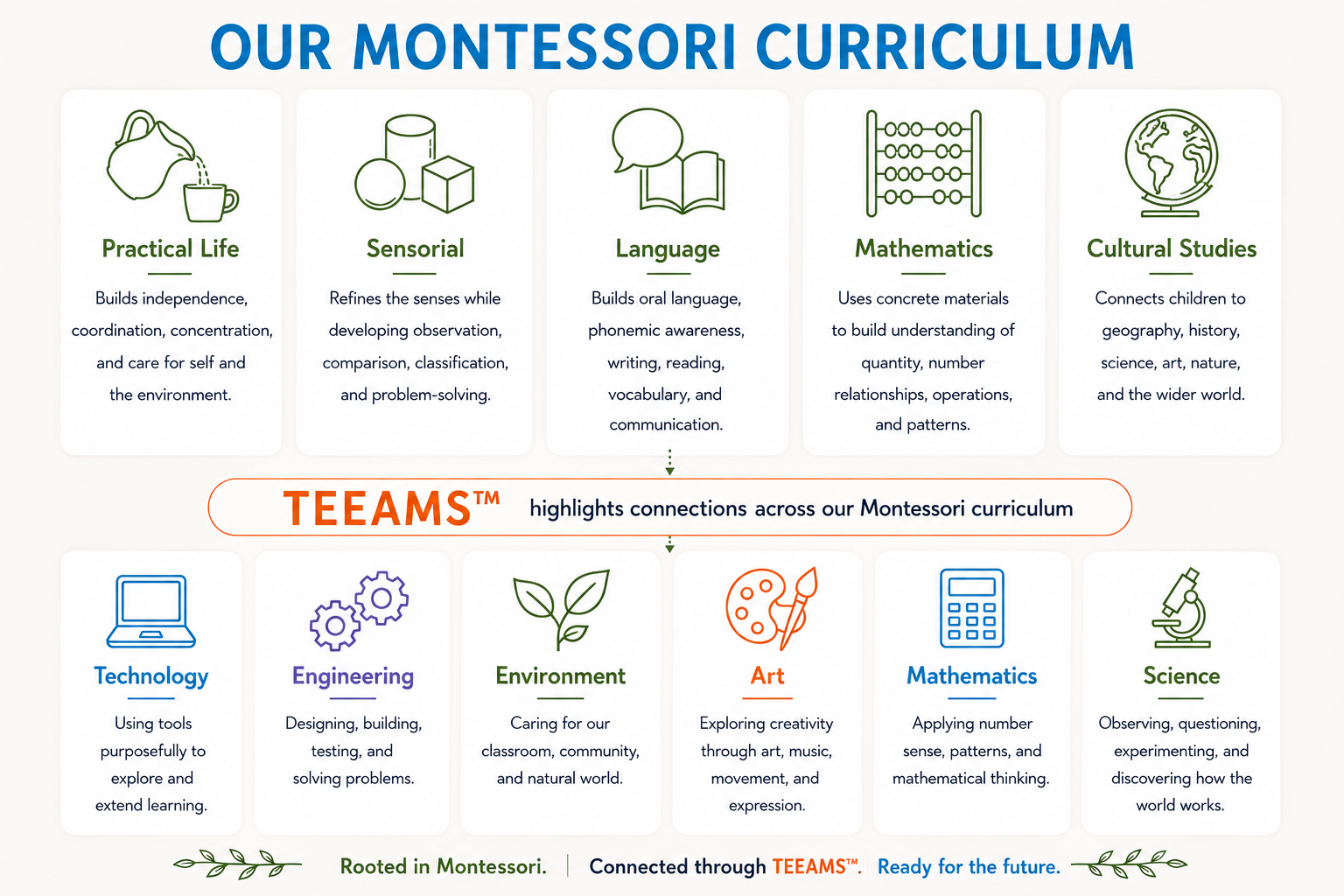
Our trademarked TEEAMS™ approach highlights how Technology, Engineering, Environment, Art, Mathematics, and Science naturally connect within that authentic Montessori experience — alongside the language, literacy, independence, and social development happening every day.
- Authentic, hands-on Montessori learning
- Language & literacy woven throughout every area
- Mixed-age classrooms that build collaboration and leadership


What Makes Montessori Different?
Children don't simply learn what to think. They learn how to think.
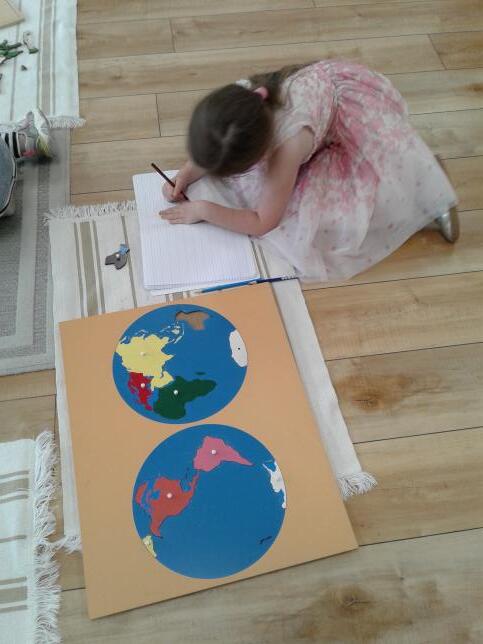
Montessori is an individualized, child-centered approach built around hands-on discovery, purposeful independence, and respect for each child’s development. Rather than relying primarily on whole-group instruction, children work with carefully designed materials, receive lessons based on readiness, and build understanding through experience.
Traditional Preschool
- Subjects often taught separately
- Teacher directs most learning
- Children often complete the same activity together
- Greater emphasis on worksheets and memorization
- Adults identify and correct mistakes
- Primarily same-age peers
Montessori at Meadow
- Learning connects naturally across subjects
- Individualized lessons based on readiness
- Purposeful choice builds independence
- Hands-on materials make learning concrete
- Self-correcting materials encourage problem-solving
- Mixed ages encourage peer learning & leadership
The difference isn’t only what children learn — it’s how they learn:
through exploration, movement, repetition, independence, and meaningful connections.
Designed for How Children Learn Best
The prepared environment turns curiosity into purposeful learning.
At the heart of Montessori is the prepared environment — a thoughtfully designed classroom where beautiful, purposeful materials are arranged to invite exploration and independence. Montessori-trained teachers observe each child’s development, introduce lessons at the right time, and then allow space for practice, repetition and discovery.
Through this process, children naturally develop skills that extend far beyond academics. For more than a century, the Montessori method has used individualized, child-centered, hands-on learning to develop many of the same skills today’s families hear described as the 4 C’s: critical thinking, communication, collaboration, and creativity.

Critical Thinking
Ask questions, make connections and solve problems.

Communication
Build language, express ideas and listen to others.

Collaboration
Learn with and from children of different ages.

Creativity
Experiment, imagine and discover new possibilities.

Montessori Has Always Been Future-Focused
Authentic Montessori is our foundation. TEEAMS™ highlights the connections.
At Meadow Montessori, authentic Montessori is our foundation. Our classrooms are hands-on and rooted in the educational method developed by Dr. Maria Montessori more than a century ago.
Today, STEM and STEAM are often used to describe education that builds critical thinking, problem-solving, creativity, and collaboration through hands-on learning. These ideas may sound modern, but they’ve been central to Montessori education for more than a century.
The Montessori curriculum — Practical Life, Sensorial, Language, Mathematics, and Cultural Studies — gives children opportunities to explore deeply, make discoveries, and understand how ideas connect.
TEEAMS™ gives us a framework for highlighting those connections. It isn’t a separate curriculum or an add-on to Montessori. It’s a way of making visible what’s already happening throughout an authentic Montessori classroom.
And Where Does Language & Literacy Fit?
Everywhere!
Language is the thread that connects every area of the Montessori classroom.
Children build oral language through conversation, songs, stories and rich vocabulary. As they are ready, Montessori’s systematic approach introduces phonetic sounds, letter formation, writing, reading and comprehension through hands-on materials and individualized lessons.
And literacy doesn’t live only on a language shelf. Children use language to name parts of a flower, record a science observation, label a map, read instructions, write about their work and communicate discoveries.
In Montessori, children don’t just learn to read and write. They discover that language is a tool for understanding the world.
Montessori Grows With Your Child
From first discoveries to confident independence.
Montessori environments evolve with each stage of development. Our mixed-age classrooms create a natural progression from observer, to participant, to leader — children learn from more experienced classmates and eventually become the ones modeling skills and helping others.
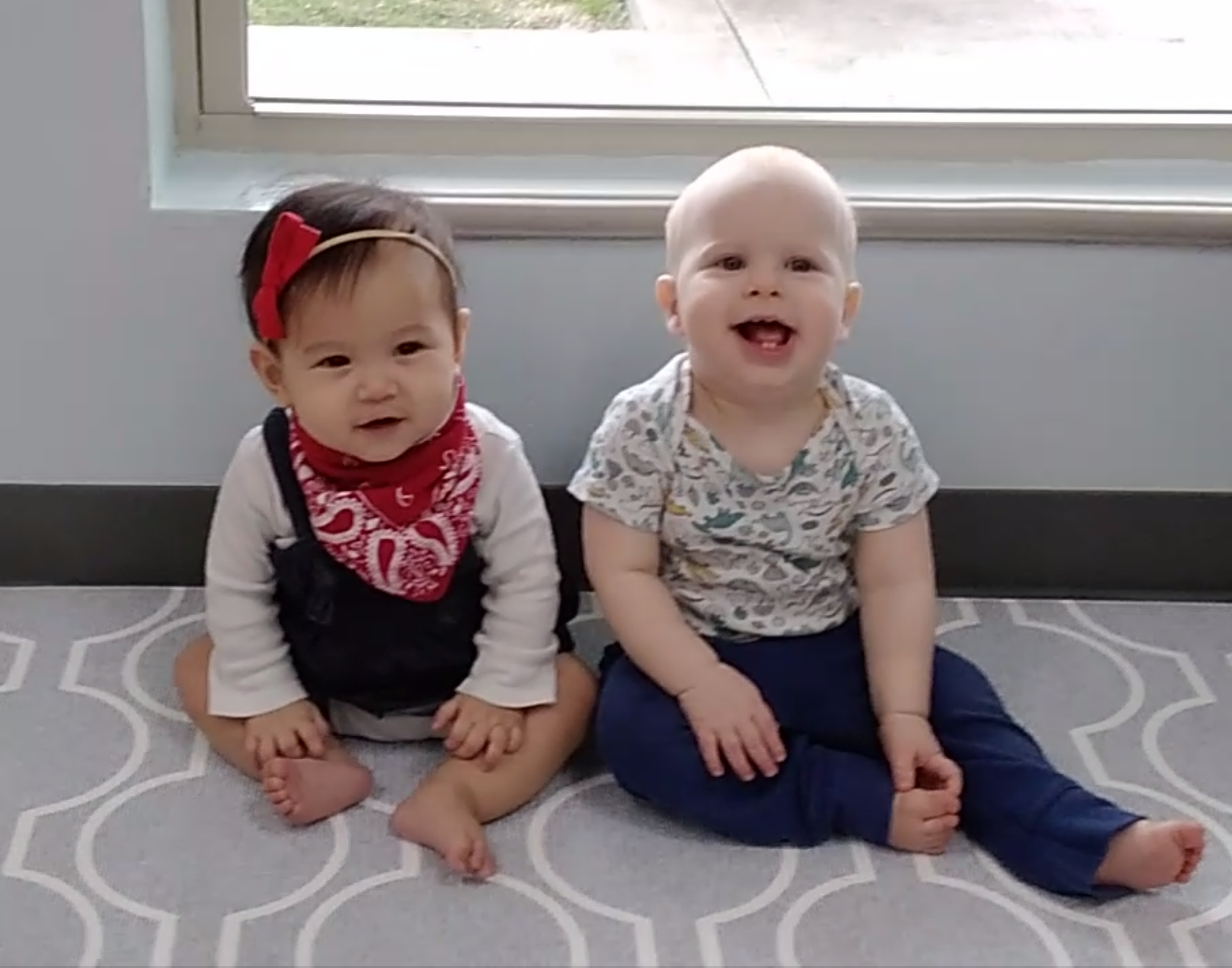
Infant
3–18 months
Movement · Language · Sensory Exploration · Growing Independence · Trust & Connection
Learn More →
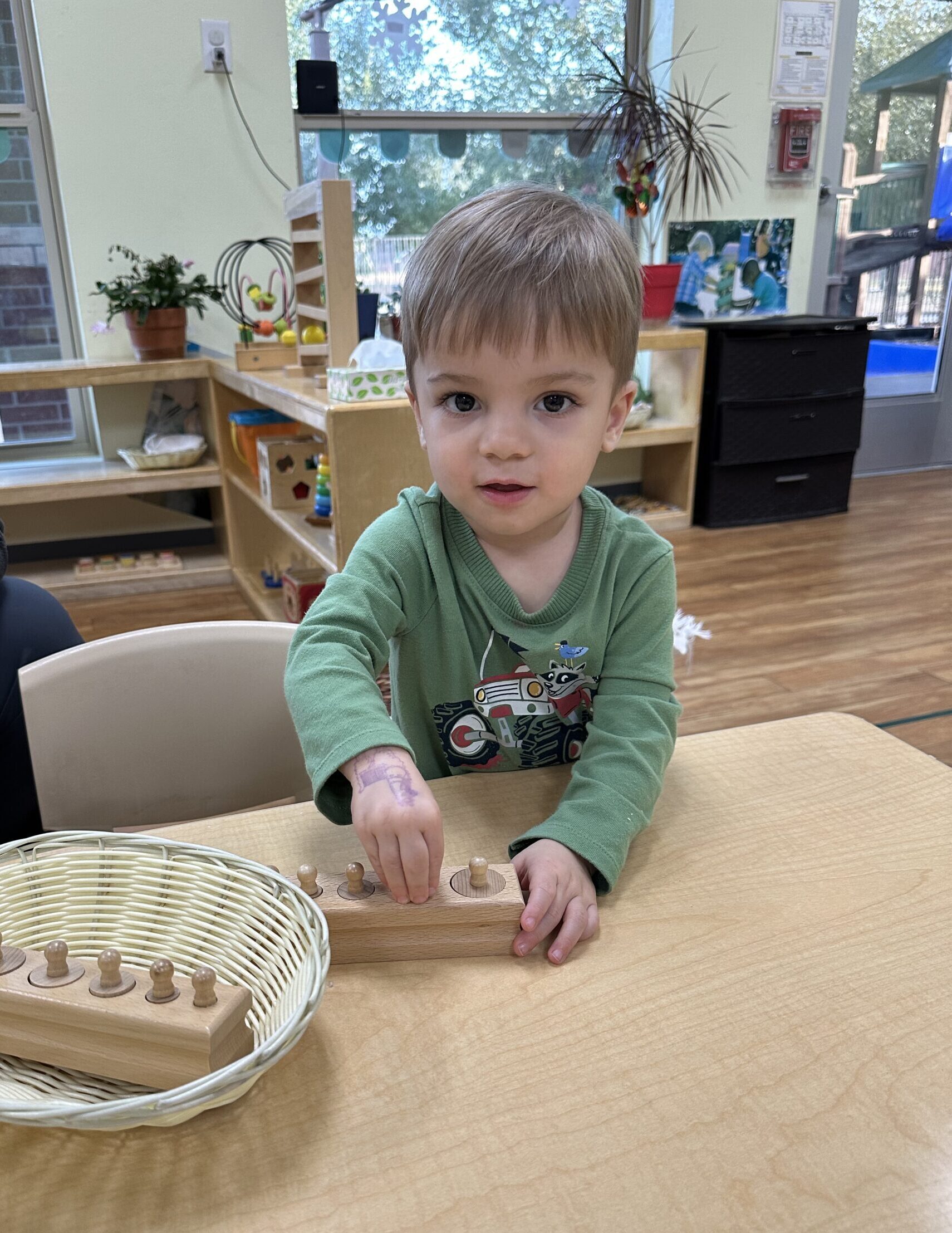
Toddler
18 months–3 years
Practical Life · Language · Coordination · Concentration · Social Development
Learn More →
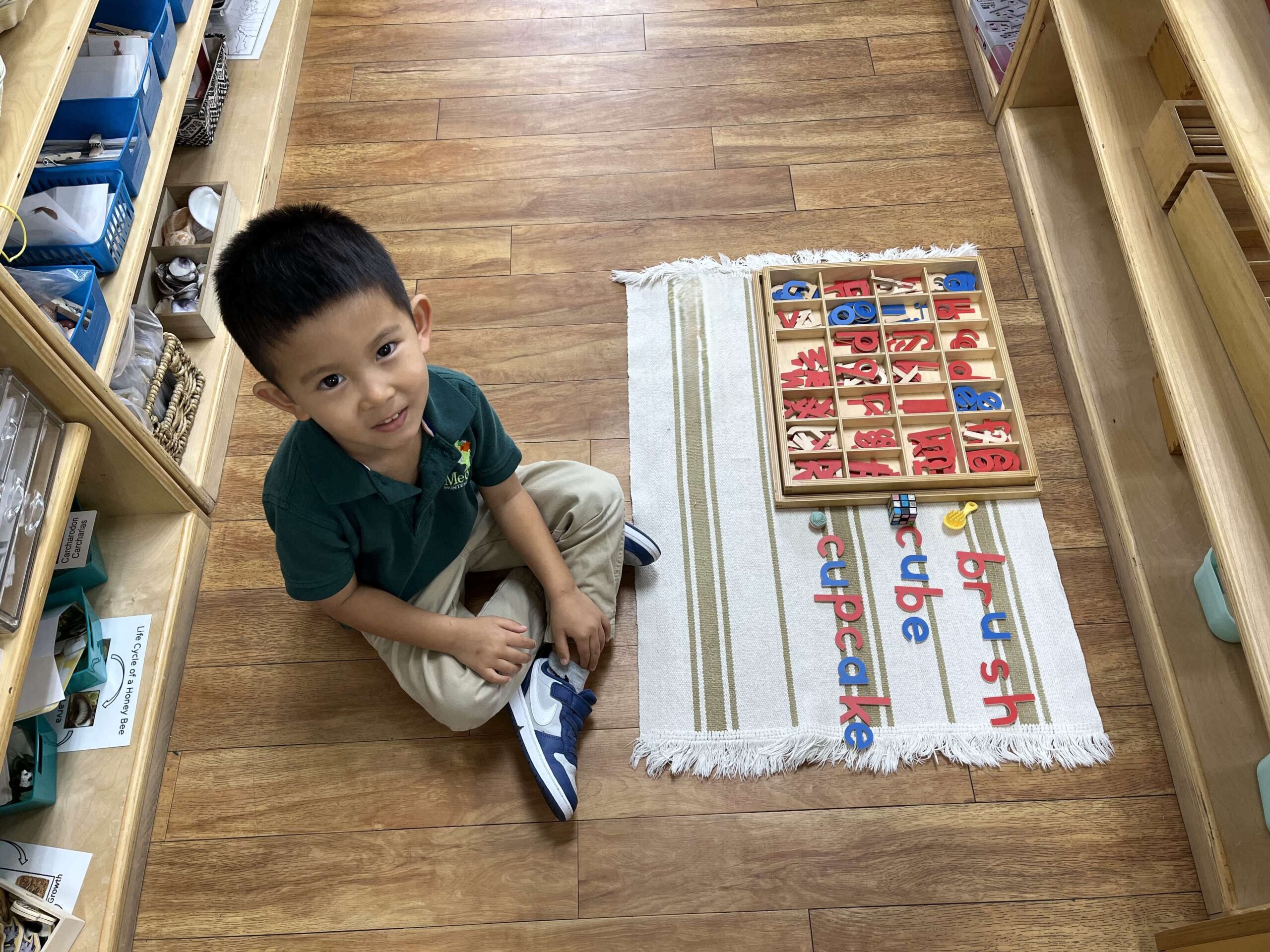
Early Childhood & Kindergarten
3–6 years
Practical Life · Sensorial · Language · Math · Culture · TEEAMS™
Learn More →
Want to see our Montessori TEEAMS™ Approach in action?
We invite you to schedule a tour and experience firsthand how Meadow Montessori helps children grow into confident, capable, and compassionate learners.
Frequently Asked Questions
Is TEEAMS™ a separate curriculum from Montessori?
No. TEEAMS™ isn't a curriculum on its own — it's our way of highlighting what's already part of an authentic Montessori education. Every child at Meadow Montessori learns in a Montessori environment grounded in the core curriculum areas of Practical Life, Sensorial, Language, Mathematics, and Cultural Studies. TEEAMS™ simply highlights the Technology, Engineering, Environment, Art, Mathematics, and Science connections that naturally emerge throughout that learning.
Does Montessori include STEM or STEAM learning?
Yes. Many of the skills now associated with STEM and STEAM — experimentation, mathematical thinking, problem-solving, creativity, observation, and hands-on discovery — have been central to Montessori education for more than a century.
Meadow Montessori's TEEAMS™ approach highlights these natural connections through Technology, Engineering, Environment, Art, Mathematics, and Science without replacing or adding a separate curriculum to Montessori.
How is Meadow Montessori different from daycare or traditional preschool?
Our Montessori curriculum in Richmond, TX emphasizes hands-on, individualized learning, purposeful independence, and progression based on readiness. Children learn through carefully designed materials and meaningful experiences within a prepared environment, while Montessori teachers observe and guide each child's individual development.
Mixed-age classrooms, uninterrupted work periods, self-correcting materials, and opportunities for purposeful choice allow children to develop not only academic knowledge, but also concentration, confidence, problem-solving, and independence.
What does “follow the child” mean in Montessori?
“Follow the child” doesn't mean children simply do whatever they want. Montessori teachers carefully observe each child's development, interests, skills, and readiness, then introduce lessons at the appropriate time. Children are given purposeful choices within a carefully prepared environment, allowing them to progress at an individual pace while continuing to build new skills.
Why are Montessori classrooms mixed-age?
Mixed-age classrooms are an intentional part of Montessori education. Younger children learn by observing more experienced classmates, while older children strengthen their understanding and confidence by modeling skills and helping others.
Over time, children naturally move from observer, to participant, to leader — building collaboration, communication, empathy, and leadership along the way.
Do all children in a Montessori classroom learn the same things at the same time?
No. Montessori education recognizes that children develop at different rates. Lessons are sequential and build upon one another, so teachers introduce new concepts when a child has developed the understanding and readiness needed for the next step.
This means two children of the same age may be working on different lessons — and that's intentional. The goal isn't to rush children ahead, but to build a strong foundation for future learning.
Does Montessori teach reading and writing?
Yes. Language and literacy are core parts of the Montessori curriculum. Children move through a carefully sequenced progression that includes oral language, phonemic awareness, letter sounds, writing, reading, vocabulary, and comprehension.
Because Montessori follows the child, children progress through these lessons according to developmental readiness rather than an expectation that every child reach the same milestone at the same age. Each lesson builds on skills developed before it, creating a strong foundation for increasingly complex reading and writing.
Do you use screens or technology with young children?
Our Montessori classrooms prioritize hands-on learning, real-world exploration, movement, creativity, and social interaction. Children under age 2 have no screen time, and we do not use screens as part of the daily classroom routine.
Beginning around age 4, children may have the opportunity to participate in a weekly computer skills lesson, where technology is introduced purposefully and developmentally appropriately. Outside of these lessons, screen use is very limited, with older students typically having only 1–2 age-appropriate movie days per year.
Within TEEAMS™, Technology is a purposeful tool — not a substitute for hands-on Montessori learning.
What is the role of the Montessori teacher?
A Montessori teacher is both an observer and a guide. Teachers carefully prepare the classroom, observe each child's development, introduce lessons at the appropriate time, and guide children toward increasingly independent learning.
Rather than moving an entire class through the same lesson at once, the teacher works to understand what each child is ready to learn next.