You do not need a shelf full of Montessori materials to bring meaningful learning into your home. In fact, some of the most valuable activities are already part of your daily routine: getting dressed, preparing food, caring for plants, and cleaning up after a meal.
In Montessori education, these are called practical life experiences. They help children refine movement, follow sequences, concentrate, and become active members of their families. The best part? You can start with items you already own.
1. Transfer and pour
Try it: Put two small bowls on a tray with a large spoon. Invite your child to transfer dry pasta from one bowl to the other. Once that becomes easy, try pouring water between two small pitchers over a towel.
What it builds: Hand-eye coordination, control of movement, attention, and the ability to notice and correct spills.
For younger toddlers, use large items that are not choking hazards and supervise closely. Avoid dried beans or tiny objects with children who still mouth materials.
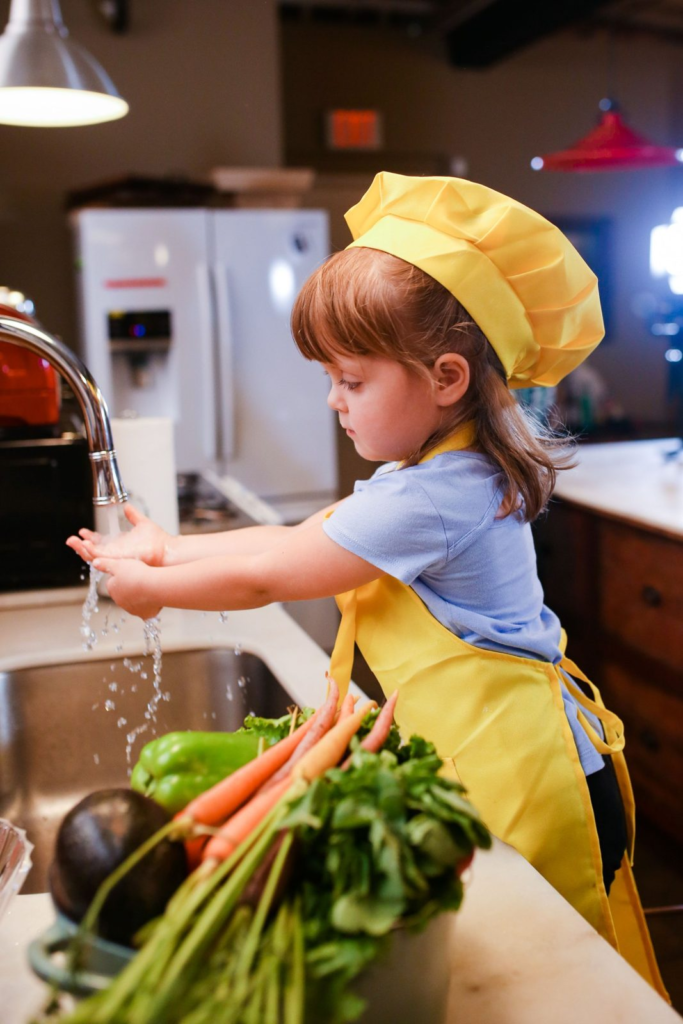
2. Wash fruits and vegetables
Try it: Place a small bowl of water, a soft brush, a few apples or potatoes, and a towel on a child-height surface. Demonstrate how to wash one item, dry it, and place it in a basket.
What it builds: Sequencing, sensory exploration, vocabulary, and a sense of contribution to family meals.
This can become a familiar routine before dinner instead of a one-time “educational activity.”
3. Practice dressing skills
Try it: Offer a jacket with an easy zipper, socks, or an item with large buttons. Show one step slowly, then let your child practice without rushing. A predictable morning setup helps tremendously.
What it builds: Fine motor coordination, persistence, body awareness, and self-confidence.
When time is short, practice at a calmer point in the day rather than turning every school morning into a race.
4. Care for a plant
Try it: Give your child a small watering can, a designated plant, and a clear place to store supplies. Show how to check the soil, pour a little water, and wipe up any drips.
What it builds: Observation, responsibility, patience, and awareness of living things.
A windowsill herb or hardy houseplant can inspire conversations about sunlight, roots, leaves, and seasonal change. Check that your plant is nontoxic to children and pets.
5. Set and clear the table
Try it: Start with napkins or spoons. For an older preschooler, create a simple place-setting guide or invite them to count the people eating dinner. Afterward, each family member can carry safe items back to the kitchen.
What it builds: One-to-one correspondence, order, spatial awareness, and responsibility to others.
Using real household routines makes the child’s contribution meaningful. Children often enjoy doing a useful job more than doing an activity invented just to keep them busy.
6. Wash a table or window
Try it: Provide a small bowl of plain water, a sponge, and a dry cloth. Model wetting the sponge, squeezing out excess water, wiping a surface, and drying it.
What it builds: Coordinated movement, concentration, and understanding a beginning-to-end process.
Use water rather than chemical cleaners for child-led work. Keep cleaning products locked away.
How to present an activity the Montessori way
Start with one manageable task. Gather supplies before inviting your child. Demonstrate slowly with few words, let your child try, and resist unnecessary interruptions. Store the materials in a consistent location so your child can return to the task independently when appropriate.
Repetition is a feature, not a problem. If your preschooler wants to wash the same table three times, they may be practicing movement and mastering a sequence that still feels new to them.
At Meadow Montessori School, practical life is part of a broader hands-on curriculum. Explore our programs to see how everyday work supports growth from toddlerhood through kindergarten.