
November often brings conversations about gratitude, but gratitude is not something children learn from one holiday craft or a reminder to say “thank you.” It develops through relationships, reflection, and daily experiences of giving and receiving care.
The same is true of compassion and confidence. These qualities grow over time, through everyday moments that may seem small: noticing someone needs help, contributing to a shared task, or learning how to make amends after hurting a friend’s feelings.
Begin with noticing, not reciting
Young children understand gratitude most clearly when it is connected to something real. Rather than asking them to list everything they should appreciate, try noticing together: “Grandpa made time to read with you,” or “Our neighbor helped carry the bags.”
Invite children to share something they enjoyed, someone who helped them, or a moment that made them feel cared for. If a child cannot think of an answer, that is okay. Adults can model reflection without forcing a response.
Give children opportunities to contribute
When children are always on the receiving end of care, they may have fewer chances to experience what it feels like to help others. Meaningful responsibilities offer a different perspective.
A toddler can bring napkins to the table. A preschooler can water a shared plant. A kindergartner can help prepare a card for someone who is ill. These activities create opportunities to notice how their actions affect other people.
In Montessori education, caring for the classroom is part of belonging to the community. Children learn that materials, spaces, and relationships deserve respect.
Practice empathy through real conversations
When a disagreement happens, it is tempting to insist on a quick apology. But a rushed “sorry” does not always mean a child understands what occurred.
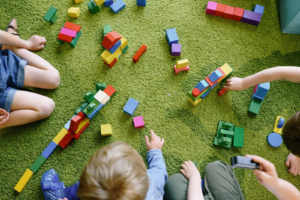
After helping everyone feel calm and safe, an adult might ask, “How do you think she felt when the block was taken?” or “What could help make this right?” Young children may need concrete suggestions, such as returning an item, offering a turn, or helping rebuild something that was knocked over.
Empathy is not a reason to ignore a child’s own feelings. Children can learn that their needs matter while also recognizing the needs of others.
Confidence grows when children feel capable
Kindness and confidence are not opposites. Children who feel capable of making decisions, asking questions, and completing meaningful tasks often have more opportunities to participate positively in a group.
Give children responsibilities they can realistically manage. Notice effort and growth. Support them through mistakes without labeling them as “good” or “bad” children based on a single moment.
A child who learns “I can try again” is also learning how to respond when social situations become difficult.
Simple traditions for the whole family
You might create a family gratitude jar with drawings or short notes, invite children to make thank-you cards, or choose a small shared service project suited to their ages. A family meal can include a quick conversation about one helpful thing someone did that day.
Keep the focus on connection rather than performance. Not every child will enjoy speaking in a group or creating a gratitude craft. A quiet conversation during bedtime may be just as meaningful.
Cultivate kindness all year
The goal is not to raise children who always say the right words. It is to help them develop awareness of others, confidence in themselves, and the ability to repair relationships when things go wrong.
At Meadow Montessori School, grace and courtesy, collaboration, and caring for our classroom community are woven into everyday learning. Families can explore our programs to see how social-emotional growth fits alongside academic development.