A child crouches beside a flower and watches an insect crawl across a leaf. Another carries a bucket of sand, stopping to adjust the weight. Nearby, two children negotiate who will use a shovel first. They may not look like they are doing schoolwork, but learning is happening everywhere.
Outdoor play gives children a different kind of classroom, one filled with movement, sensory experiences, unpredictable discoveries, and opportunities to make decisions. It supports physical development while also inviting language, observation, and cooperation.
Big movements help children understand their bodies
Climbing, running, balancing, and carrying objects challenge children to coordinate their muscles and move confidently through space. Outdoor settings usually allow larger movements than indoor rooms can accommodate.
Children need varied, age-appropriate chances to use their bodies. A low balance beam, an uneven grassy path, or a gentle slope offers opportunities to practice planning and adjusting movement.
The aim is not to eliminate every challenge. It is to provide appropriate supervision and boundaries so children can explore manageable risks safely.
Nature makes curiosity visible
Outdoors, questions arise naturally: Why are some leaves yellow? Where did the puddle go? What happens when we water this seed? These are early scientific questions, even when a child cannot yet explain them in formal terms.
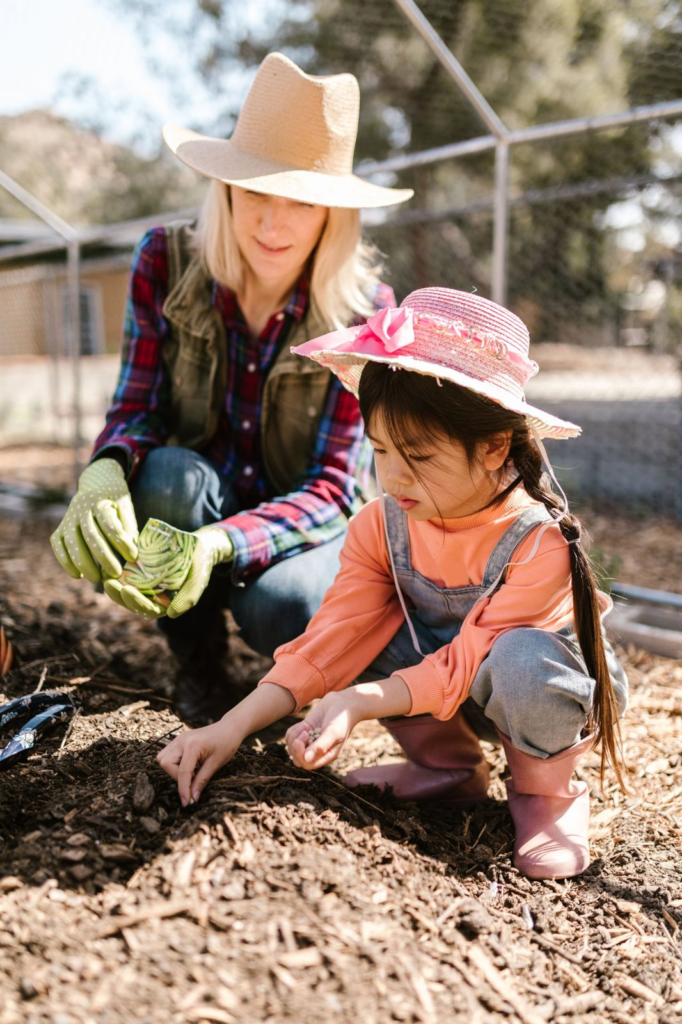
Children observe patterns, make predictions, test ideas, and notice changes over time. Gardening, in particular, provides a concrete way to understand that living things need care and that growth takes patience.
Rather than always supplying answers, adults can ask, “What do you notice?” or “What do you think will happen next?”
Outdoor time creates opportunities for social learning
A garden bed or sandbox often becomes a shared project. Children must communicate what they are doing, wait for materials, and resolve minor disagreements. Because the activity has a common purpose, cooperation can feel natural.
A child who is usually quiet in a group discussion may eagerly explain the bug they discovered. Another who struggles with waiting might find motivation when helping build a sand structure with friends. Different environments invite different strengths to emerge.
Children benefit from unhurried exploration
A full schedule of adult-directed activities can leave little room for children to follow their own ideas. Outdoors, a child may spend ten minutes examining the same patch of grass. That focused observation is valuable.
You do not need to turn a walk into a lesson. Notice what attracts your child’s attention. Collect a few fallen leaves, count birds, listen for sounds, or compare the texture of tree bark. Simple conversations can build vocabulary without interrupting the joy of discovery.
Make outdoor play realistic in Fort Bend County
Families in Richmond and throughout Fort Bend County know that heat, humidity, rain, and mosquitoes require planning. Choose cooler parts of the day when possible, offer water, seek shade, and follow age-appropriate sun and insect protection guidance. On dangerously hot days or during storms, move the exploration indoors.
Outdoor learning does not always require a park trip. Watering a porch plant, watching rain from a covered space, or looking for clouds on a short walk can be meaningful.
Let nature be part of the routine
Small, consistent experiences are often better than elaborate occasional outings. Children who return to the same garden or tree can notice changes over weeks and seasons. They begin to understand that they are connected to the living world around them.
At Meadow Montessori School, outdoor environments and gardening complement hands-on classroom learning. Learn more about our educational approach through our programs.