When parents think about kindergarten readiness, the first questions are often academic. Can my child recognize letters? Count to twenty? Write their name? Those are useful skills, but they do not tell the whole story.
A child may know many letter sounds and still find it difficult to ask for help. Another may be an enthusiastic problem-solver who is just beginning to recognize written numbers. Children grow in different ways and at different rates. A strong foundation for kindergarten includes academic development, but it also includes social, emotional, practical, and communication skills.
Can your child communicate needs?
Being able to tell an adult “I need help,” “I don’t understand,” or “I need to use the bathroom” makes school feel safer and more manageable. Children also benefit from practicing how to listen, express an idea, and participate in short conversations.
You can support these skills through everyday talk. Invite your child to tell you about a picture, explain how they built something, or describe what happened during the day. The goal is not a perfect answer. It is growing confidence in using language.
Can your child manage everyday routines?
Opening a lunch container, washing hands, putting away a jacket, and following familiar steps all make a difference. Children who can participate in their own care have more energy available for learning and connection.
Practice one routine at a time. If opening packaging is frustrating, simplify lunch supplies or rehearse together at home. Independence should develop through preparation, not pressure.
Can your child work through small frustrations?
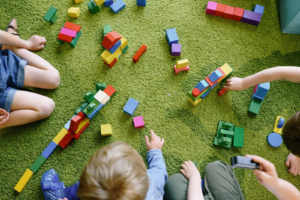
Every classroom includes moments when a plan changes or something does not work immediately. A block tower falls. A favorite material is in use. A child gets an answer wrong.
Readiness does not mean a child never becomes upset. It means they are gradually building ways to cope: pausing, using words, trying another approach, or seeking help from a trusted adult.
At home, model your own problem-solving aloud: “That didn’t work the first time. I’ll try a different way.” Children learn a great deal from watching how adults respond to mistakes.
Can your child participate in a community?
Kindergarten involves other people with needs, ideas, and feelings. Listening to a classmate, taking turns, caring for shared supplies, and repairing a disagreement are ongoing learning experiences.
Practice these skills during playdates, family games, and household routines. Even a simple card game introduces waiting, flexibility, and handling disappointment.
Curiosity matters as much as correct answers
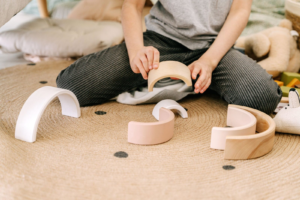
A child who asks why, experiments with materials, or notices a pattern is already practicing the habits of a learner. Hands-on activities offer opportunities to build reasoning and persistence before concepts become abstract.
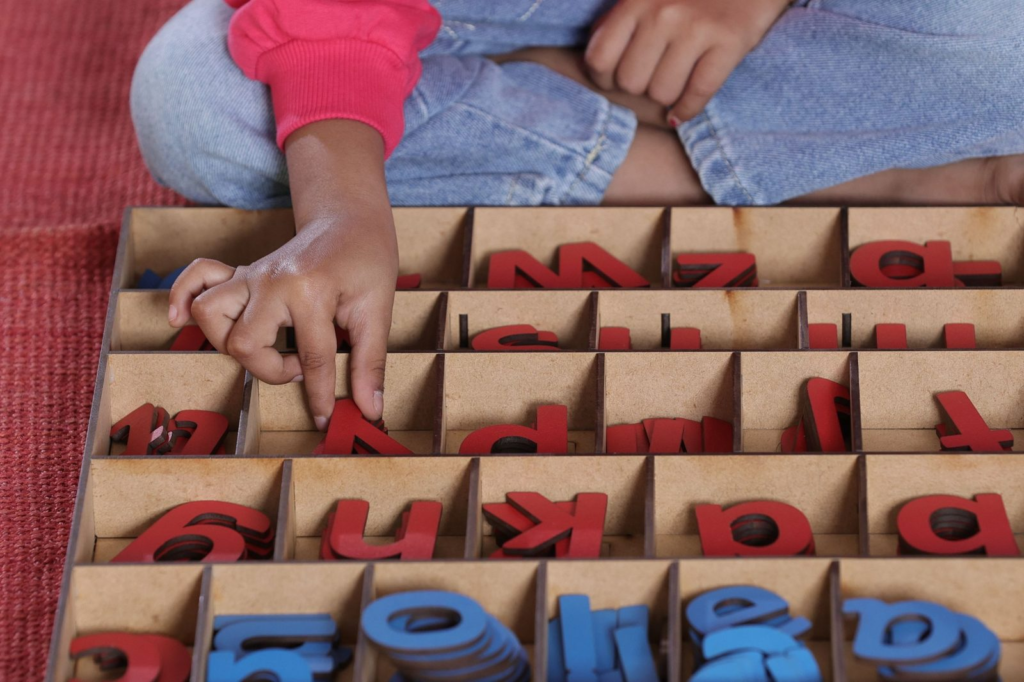
At the same time, letters, sounds, numbers, shapes, and stories are important parts of early learning. The most effective preparation is not choosing between academics and the whole child. It is recognizing how these areas support one another.
The Montessori third year has a special role
In Montessori Early Childhood, children typically spend three years in a mixed-age environment. The kindergarten year is the culmination of that cycle. Older children are able to revisit familiar concepts at greater depth, take on leadership opportunities, and apply growing independence to more complex work.
They are not simply waiting to move on to elementary school. They are using the confidence and knowledge developed over previous years to become capable classroom leaders.
At Meadow Montessori School, our Early Childhood program, including kindergarten, supports academic growth alongside independence, social-emotional development, and curiosity. When families visit, we welcome conversations about the full picture of school readiness, not just a checklist of milestones.